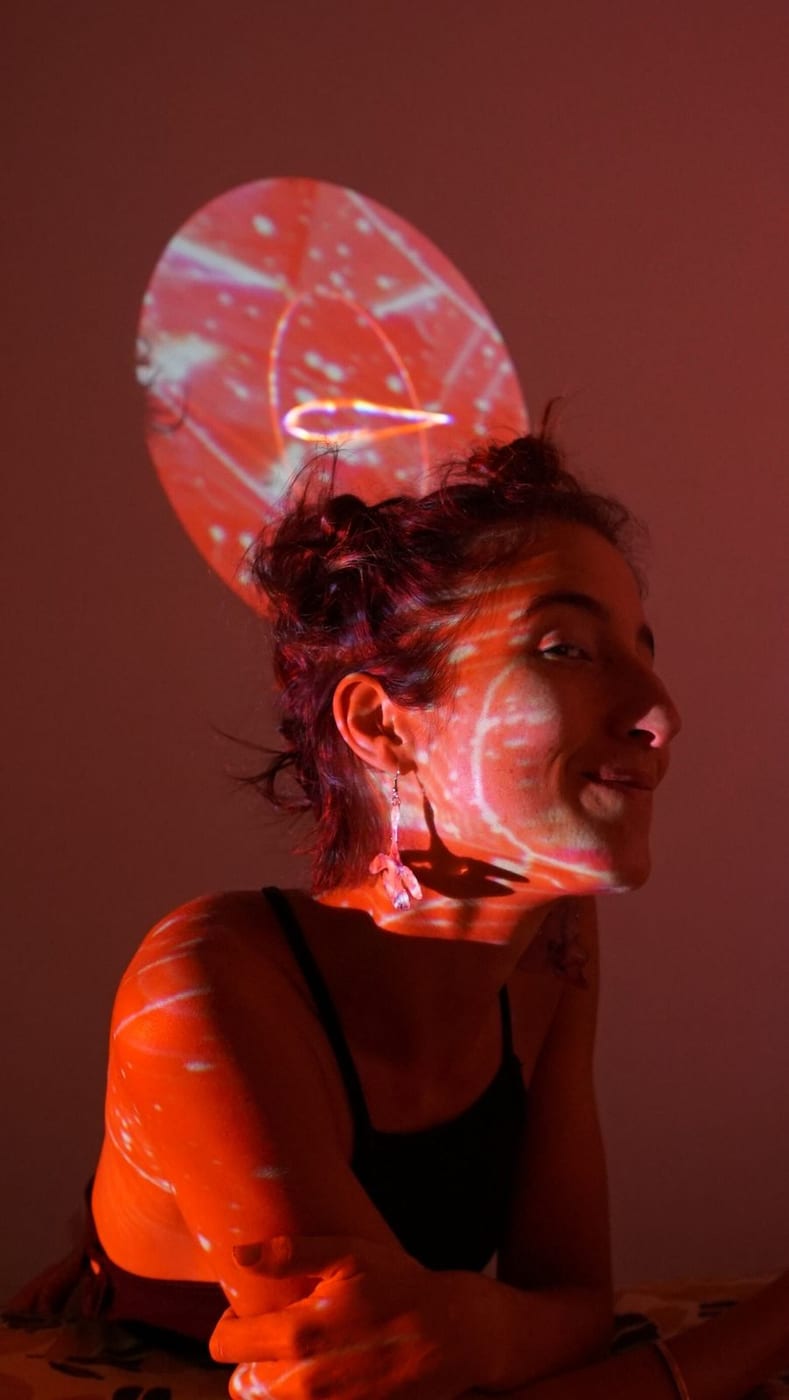
Martina Buroni
Visual artist and stage designer trained in sculpture and applied arts. Her work articulates artistic conceptualization, scenic creation, installation and sculpture in dialogue with living space.
For decades we believed that RNA acted only inside the cell — carrying instructions, regulating fundamental biological processes, shaping life itself. At best, RNA could travel from cell to cell sheltered inside vesicles.
But Uruguayan scientists discovered that RNA also exists outside the cell, traveling on its own, floating, acting as a communicative bridge between cells, transforming our understanding of the body.
This finding writes a new page in biology and opens paths for medicine, materializing what was invisible, what seemed impossible: RNA molecules floating, now taking shape, volume and presence.
Juan Pablo Tosar, Alfonso Cayota and collaborators at the Universidad de la República and the Institut Pasteur de Montevideo discovered, for the first time, that RNA molecules can operate outside cells, on their own, without the help of vesicles. Ribosomes, transfer RNAs (tRNAs) and dimers of tRNA halves navigate between cells in extracellular space — carrying information from cell to cell.
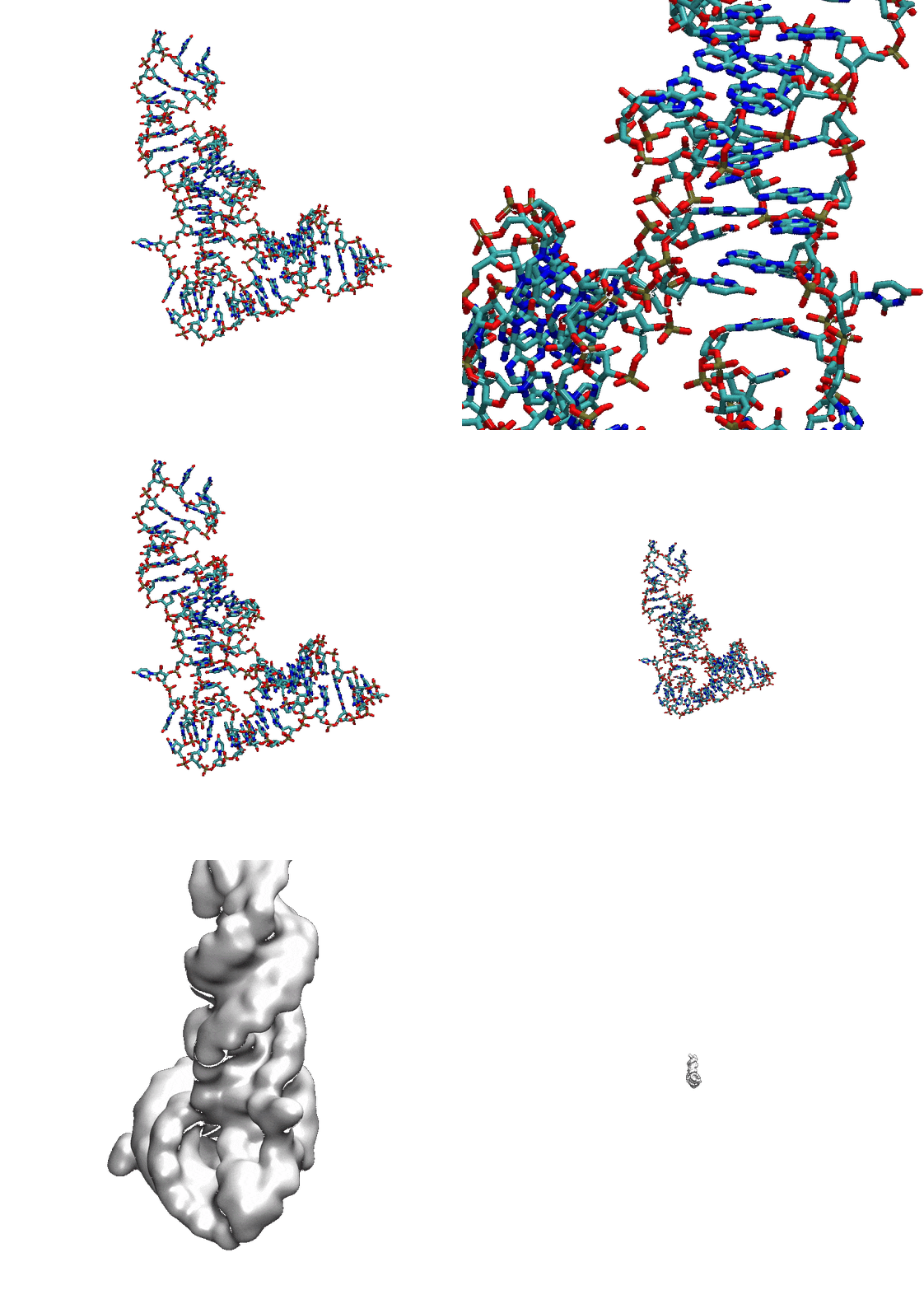
This finding opens new possibilities for innovative medical diagnostics and disease treatment. In a side project, researchers Leonardo Darré and Pablo D. Dans (also at UdelaR and the Institut Pasteur) applied computational methods to determine the three-dimensional (3D) structure of these extracellular RNAs — giving form to the invisible, drawing a new mode of cellular communication.
RNA (ribonucleic acid), the cousin of our DNA, is a fundamental molecule that plays a crucial role in protein synthesis. RNA gained widespread attention during the pandemic, when several COVID vaccines were built on this molecule. RNA is remarkably versatile — it can carry, from the nucleus to the cytoplasm, a message obtained from our DNA, and once in the cytoplasm, read that message and produce the proteins essential to life.
Messenger RNAs (mRNAs) carry the message; transfer RNAs (tRNAs) translate it into proteins; ribosomal RNAs (rRNAs) are the factories where production happens. Long non-coding RNAs (lncRNAs) and short interfering RNAs (siRNAs), among others, finely regulate the entire production process.
RNA functions were always thought to occur within membranes — inside cells or vesicles. But serendipity and the trained minds of Uruguayan scientists identified RNA molecules functioning outside the cell, called extracellular RNAs, that do not depend on vesicles. This key discovery has expanded our understanding of how cells communicate and adapt. In particular, ribosomes, tRNAs and tRNA halves were shown to travel freely between cells, playing a role in communication.
Knowing the structure of these molecules is fundamental to understanding how they interact in biological systems, and also lets us materialize something abstract — something that occurs in extracellular space — into a 3D object with surface and volume. With computational chemistry methods, the team of Uruguayan researchers determined the 3D shape these RNAs take in space, and how flexible and stable they are.
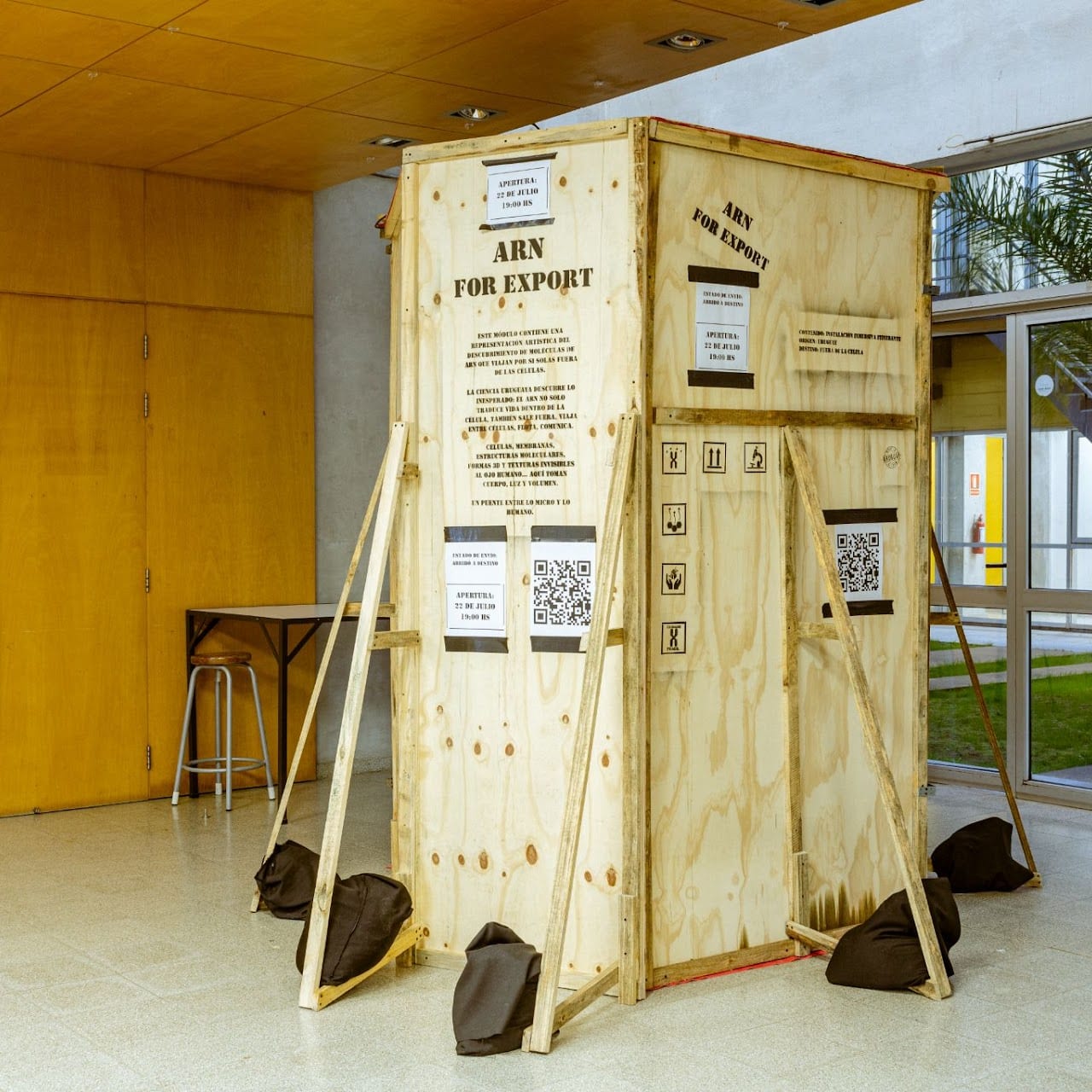
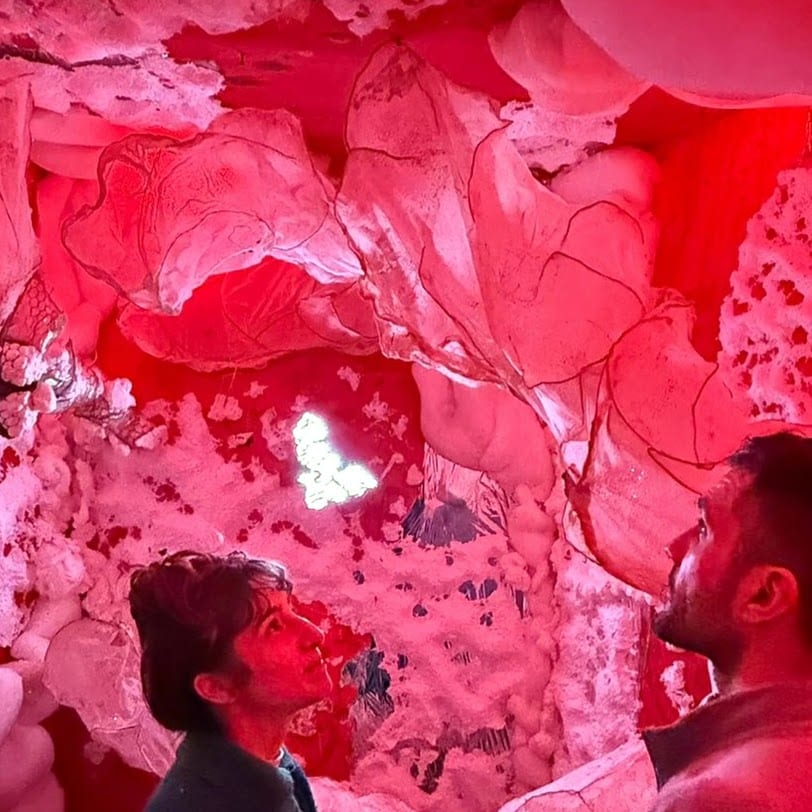
ARN for Export is a sensory installation that translates this discovery into the language of the senses. Through a composition of diverse materials, sonic space, fractals and a holographic core, visitors enter a space inspired by the extracellular universe.
Designed as a symbolic export box — from Uruguay to the world, and from the cell's interior to extracellular space — the room invites visitors to explore the invisible: the molecular journey, communication between cells, and the poetry of discovery.
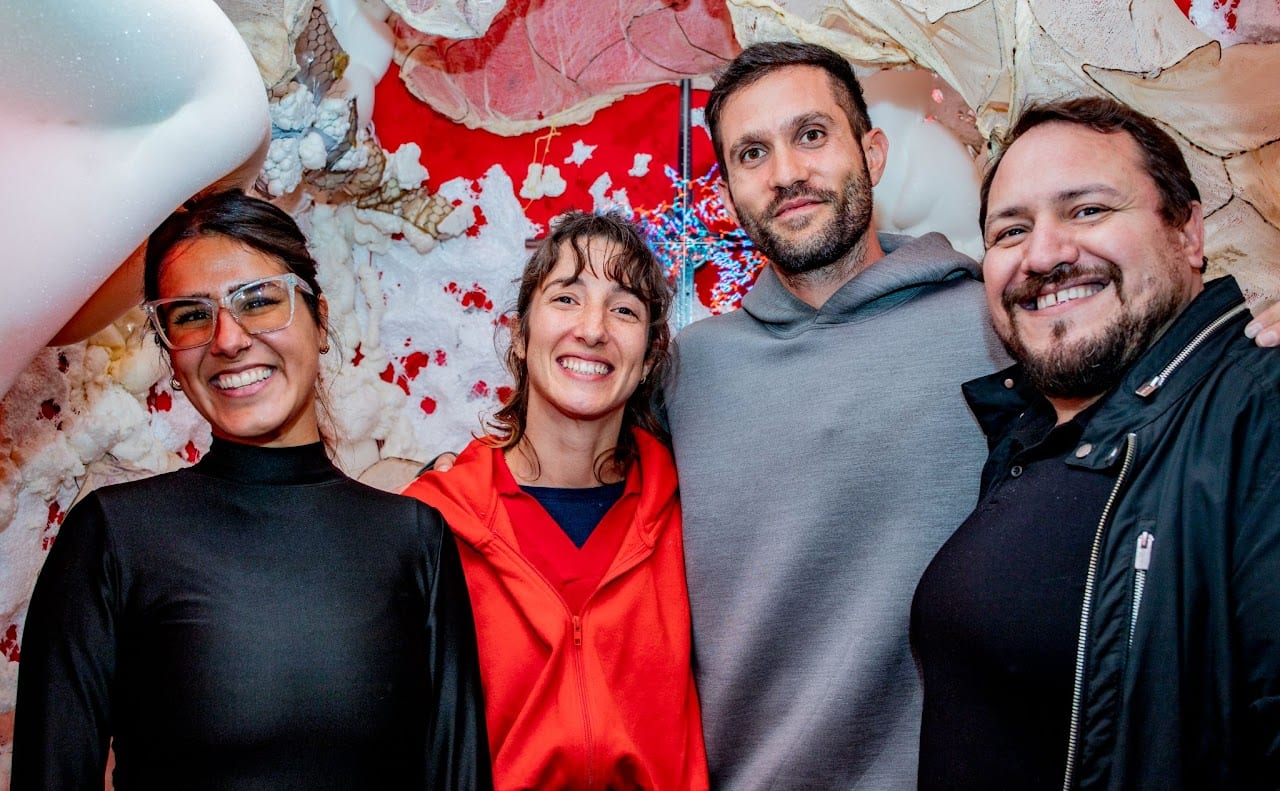
This artistic proposal was made possible by an outreach allocation of an ANII Fondo Clemente Estable competitive project (Leonardo Darré and Pablo Dans) and the Fondo Regional para la Cultura of the Ministry of Education (MEC), Uruguay (Nito Cilintano — lead — Martina Buroni, Mariana Barraco and Pablo Dans).
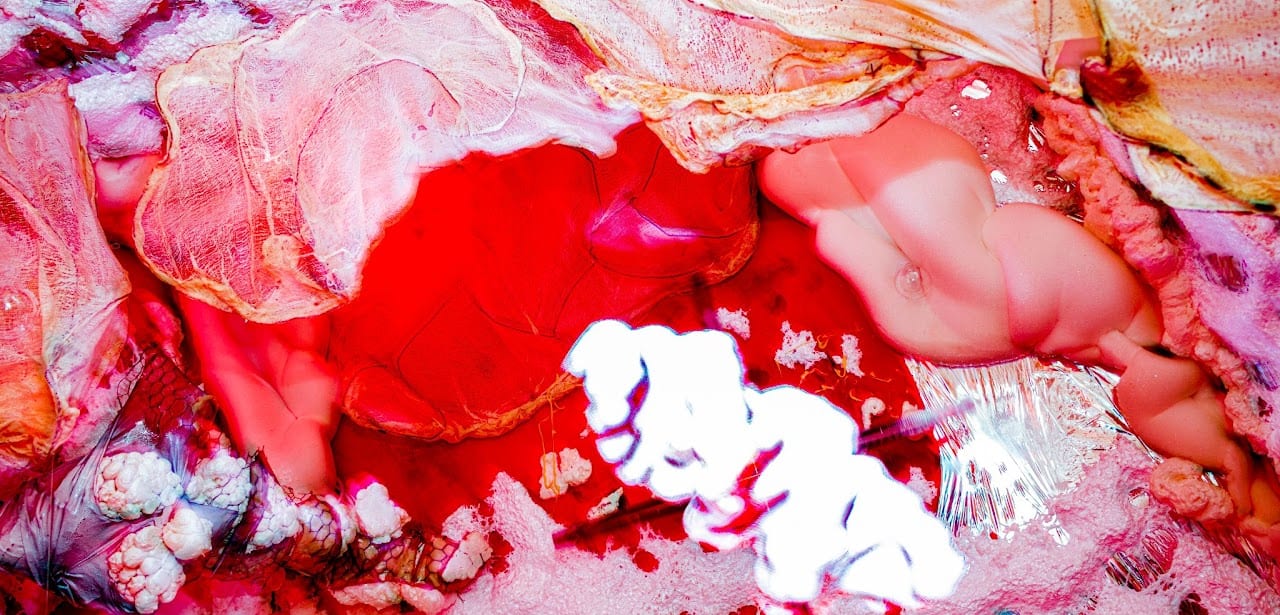
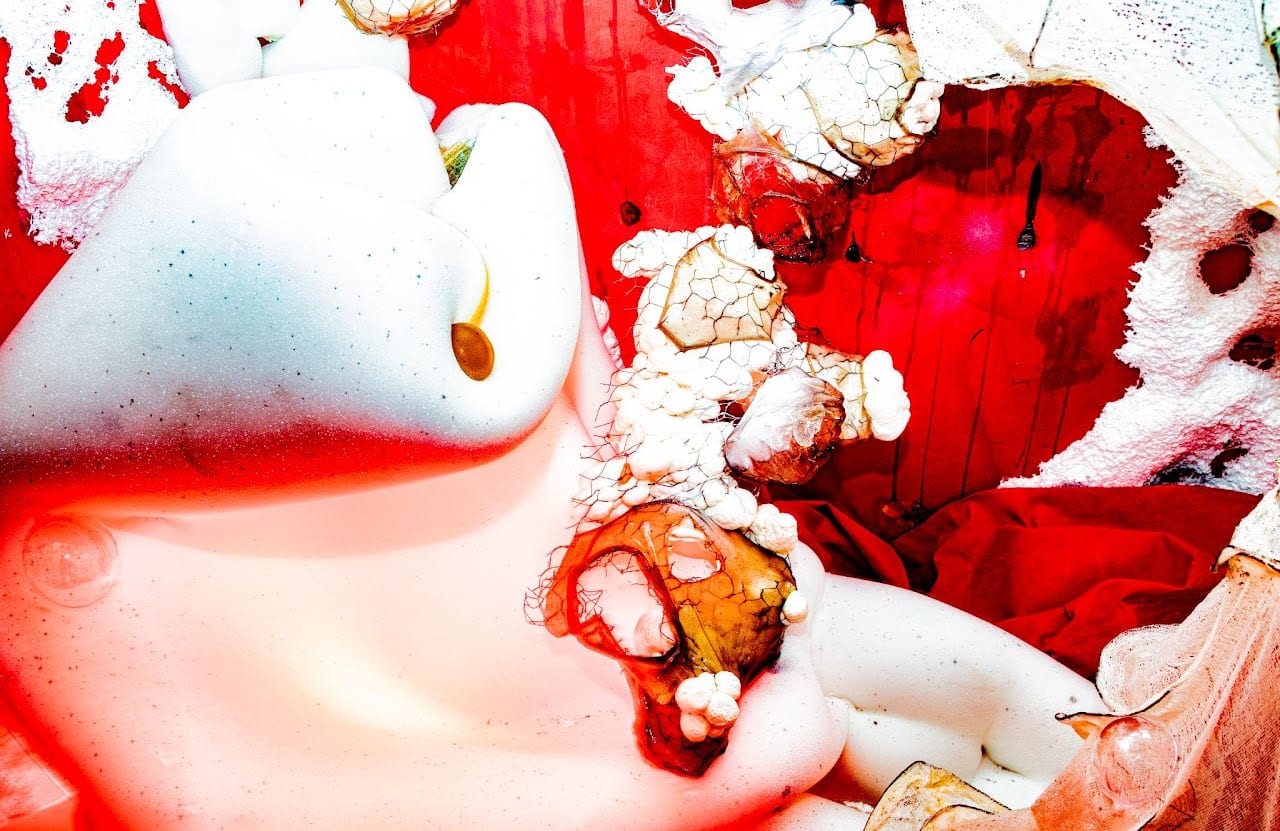
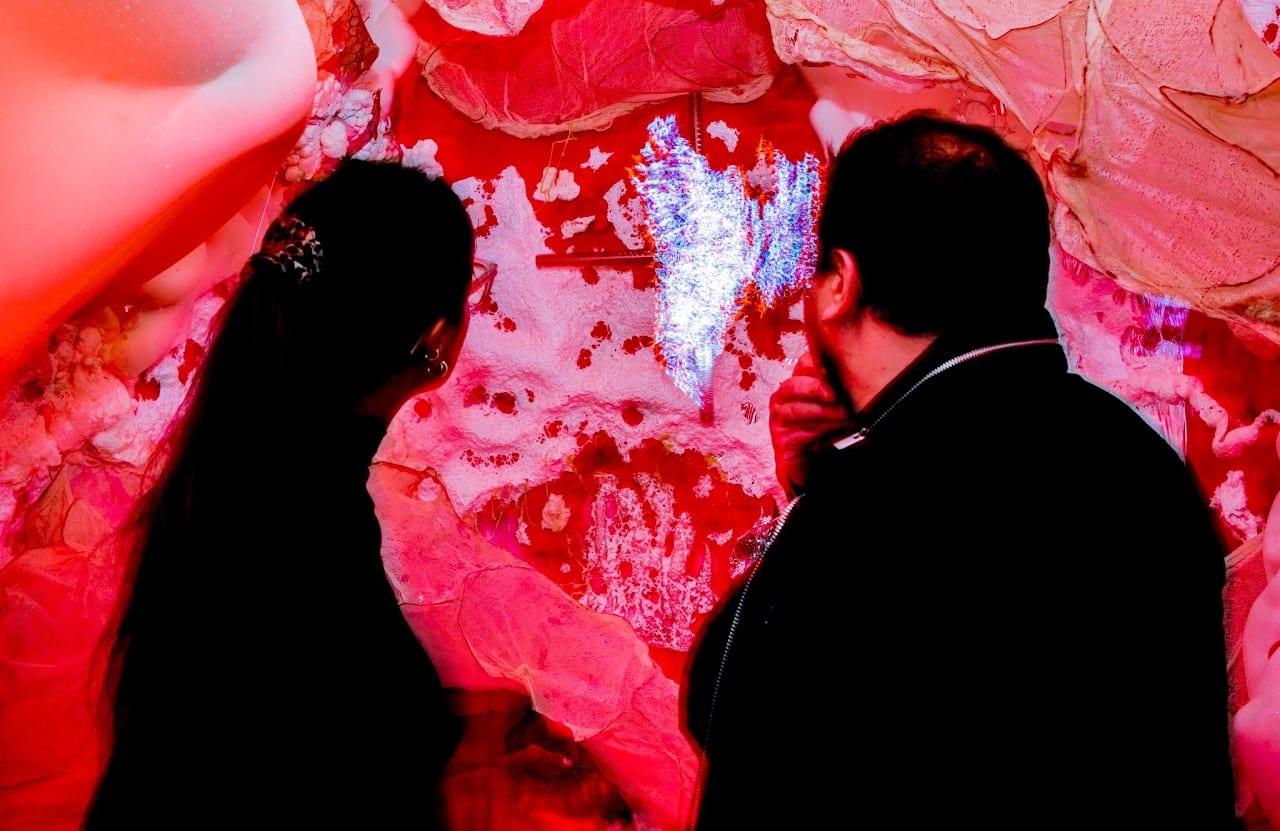
The installation proposes an atmospheric interpretation of extracellular space. Through material exploration, distorted forms were built that generate volumes, hollows and translucency, giving the space an organic and enveloping presence.
A reduced color palette — white and red — lets shape reveal itself through interior light, while the red illumination suggests an intimate, almost visceral experience. The sonic environment — echoes and whispers with key words — simulates RNA's journey as a carrier of messages, completing an immersive experience that connects body, matter and language.
The exterior of the space takes the form of an export box — a conceptual decision that links science with the act of sharing knowledge. Just as RNA transports information between cells, this installation is conceived as a symbolic container from which knowledge generated locally can project itself outward.
Visual artist and stage designer trained in sculpture and applied arts. Her work articulates artistic conceptualization, scenic creation, installation and sculpture in dialogue with living space.
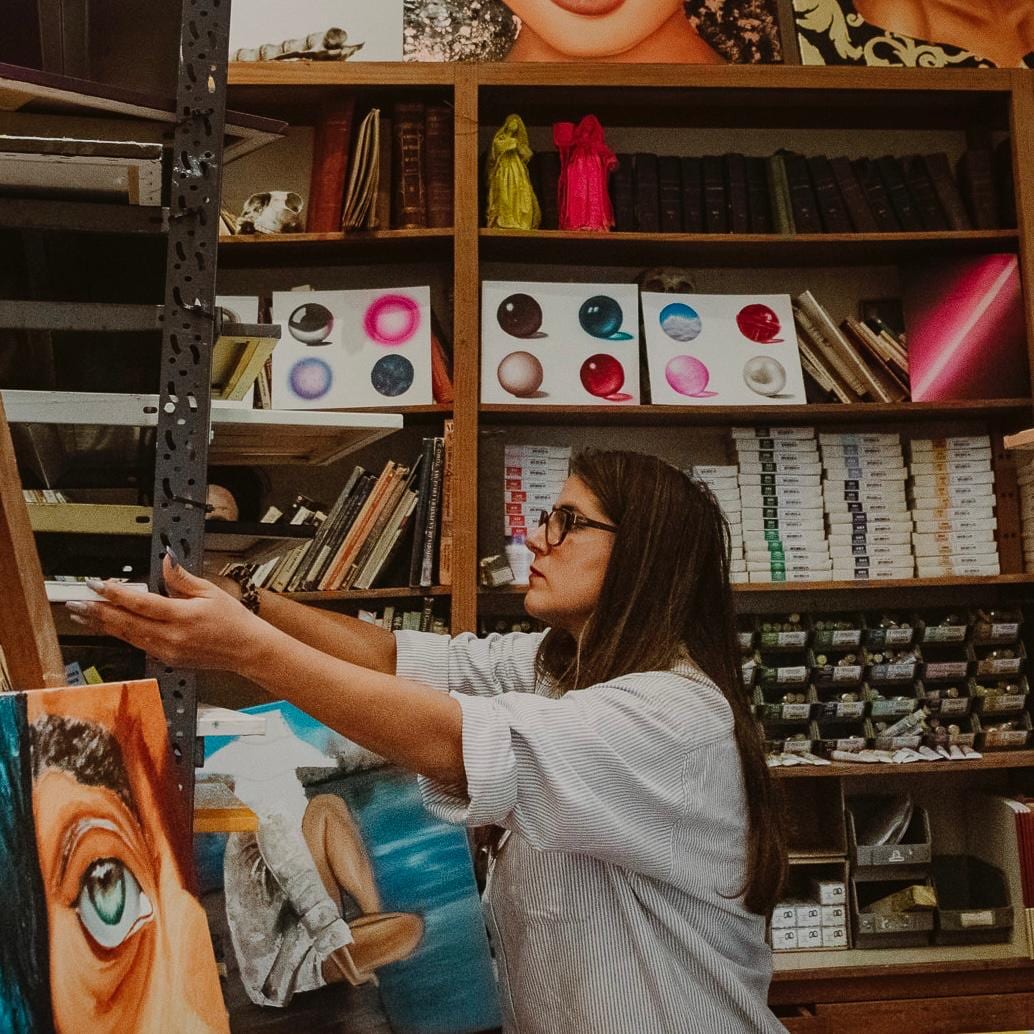
Artist, teacher, director of Atelier Mari Barraco. Her multidisciplinary approach combines drawing, painting, ceramics, sculpture and digital art. She designs artistic experiences that democratize art and transform spaces.
Atelier Mari Barraco · Instagram →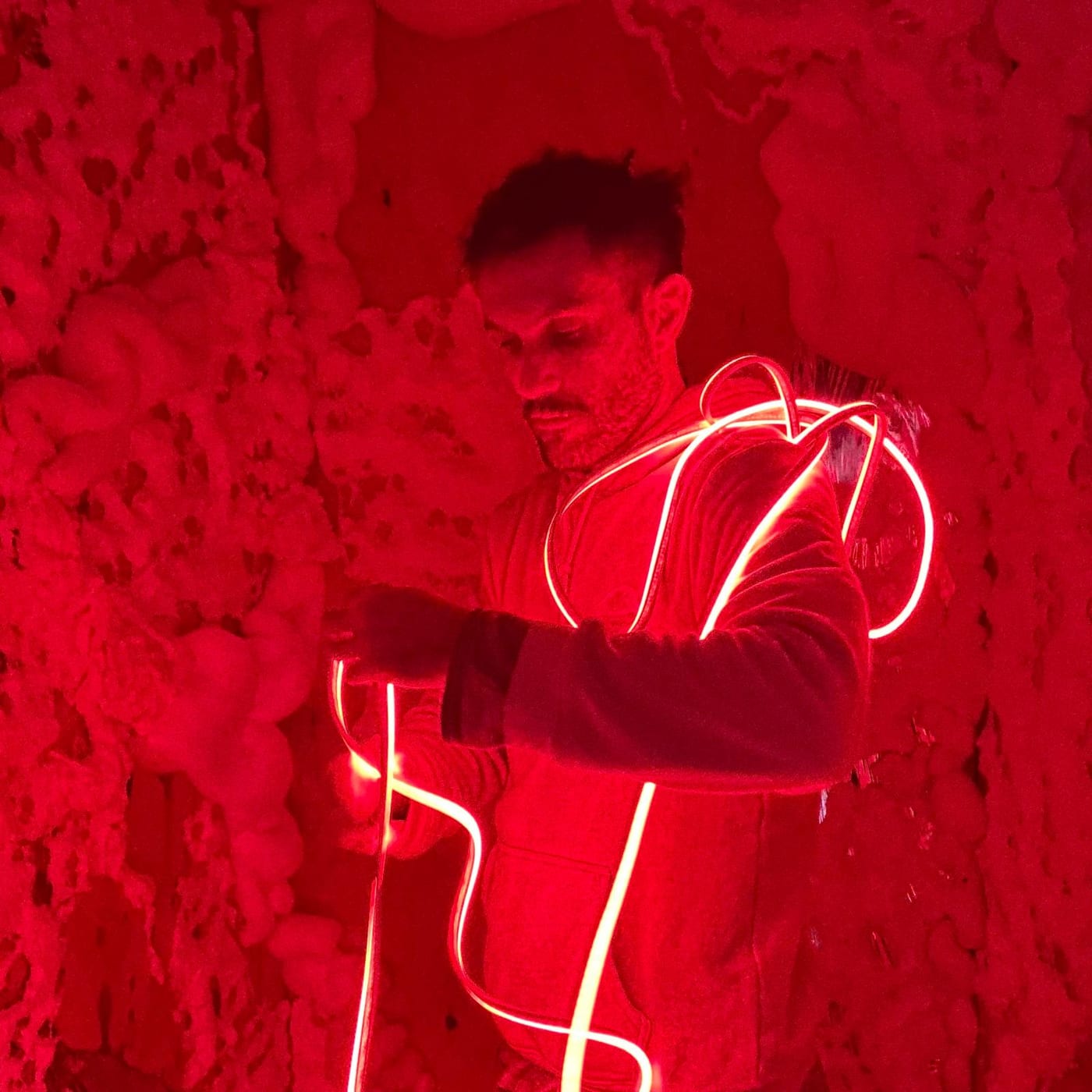
Visual artist, audiovisual creator and university professor. He works at the intersection of technology, spatiality and perception, developing installations and audiovisual pieces with a scenic and performative approach.

Researcher, teacher and science communicator. International expert in nucleic acid structure (DNA and RNA) and in computational chemistry, molecular modeling, simulations and structural bioinformatics.
ARN for Export opened at three sites of the Universidad de la República, where it remained open to the public for several weeks at each venue.

22 July 2025
CURE — Centro Universitario Regional del Este
Maldonado

1 September 2025
CENUR Litoral Norte
Salto

10 November 2025
Facultad de Ciencias
Montevideo

If you would like to bring the ARN for Export installation to your educational or cultural space, get in touch.
Copyright DansLab & Atelier Mari Barraco — 2025


